
WHY SOME HVAC CONTRACTORS ARE QUIETLY WALKING AWAY FROM REPLACEMENT JOBS
Why Contractors Are Walking Away From “Good” HVAC Replacement Jobs
Here’s something that would’ve sounded crazy not that long ago:
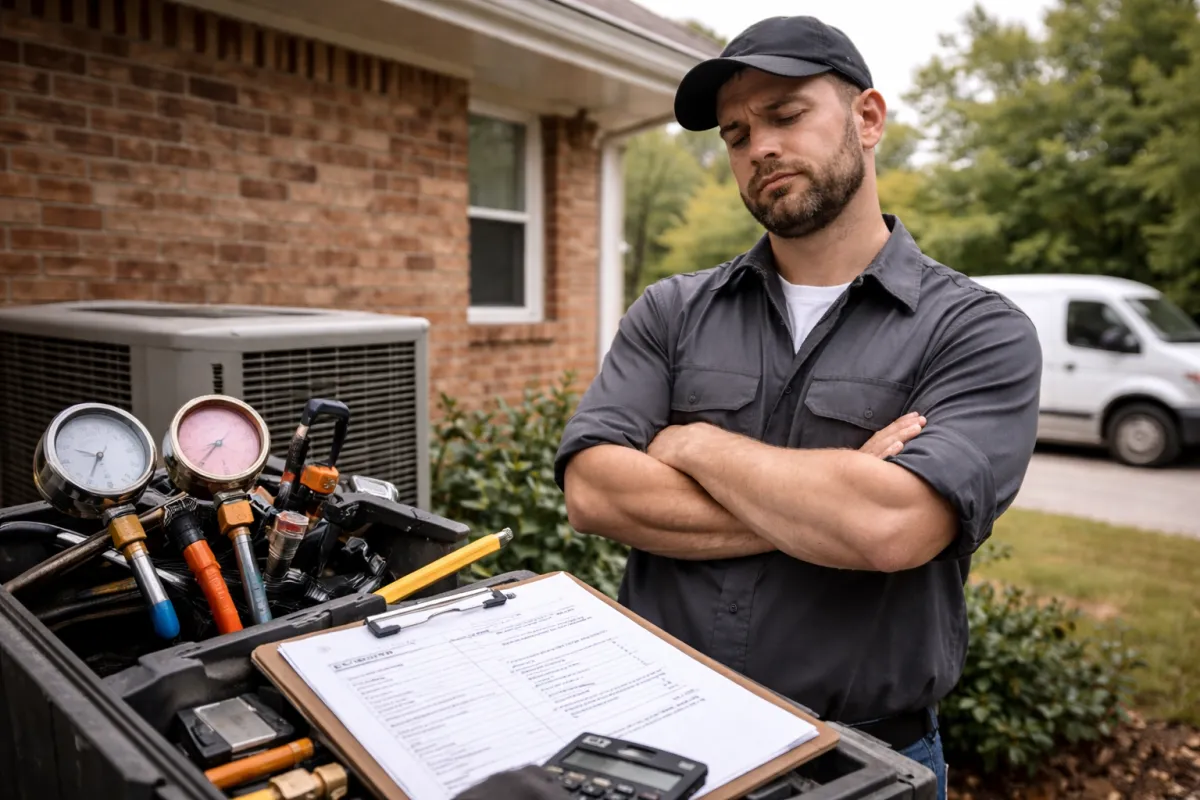
A licensed, insured HVAC contractor — busy, experienced, and very much not hurting for work, turned down a full system replacement.
Not because the homeowner was difficult.
Not because the equipment was weird.
Not because the job was risky.
They walked because the numbers didn’t make sense for their business anymore.
And before anyone jumps in with “well they must not know how to sell value,” slow down. This isn’t about sales skills. It’s about reality catching up with how our industry actually works.
Homeowners Didn’t Get Dumber — They Got the Internet
Homeowners today don’t start at zero anymore. They show up with:
pricing ranges pulled from half a dozen websites
“instant estimates” that may or may not be grounded in reality
a general sense of what should cost what
No, the numbers aren’t always right. But they’re also not totally wrong — and pretending otherwise doesn’t help anyone.
So when a contractor walks in with a price that reflects real overhead, real labor costs, real warranty exposure, real insurance, and real staffing… the gap can feel massive to the customer. Not because the contractor is greedy — but because the business model behind the price isn’t visible to them.
The Job Wasn’t Bad — The Fit Was
Here’s the uncomfortable part most contractors don’t like saying out loud:
Some replacement jobs simply don’t fit certain businesses anymore.
If your company is built for:
high service standards
multiple layers of support staff
long warranties
tight scheduling guarantees
…then yes, your replacement pricing will reflect that. And it should.
But that doesn’t mean every homeowner wants or needs that level of structure — or that they’re wrong for questioning it.
So instead of forcing the job to fit, some contractors are doing the smarter thing: they’re passing.
This Isn’t a Pricing Problem — It’s a Model Problem
Everyone wants to argue pricing like it exists in a vacuum.
It doesn’t.
Pricing is a reflection of:
how your business is structured
how much overhead you carry
how much risk you assume
how many people you’re supporting
Two contractors can install the same equipment, to the same code, with wildly different cost structures behind the scenes. That gap is now being exposed — loudly — because homeowners can compare faster than ever.
That doesn’t make one contractor “bad” and the other “cheap.” It just means the industry isn’t as uniform as we pretended it was.
Why Walking Away Is Sometimes the Right Call
The contractor in this case didn’t lose money.
They protected their business.
They recognized that:
winning the job would mean compromising margins
explaining the pricing gap would turn into a debate
the customer wasn’t wrong — just mismatched
So they declined politely and moved on to work that actually fit how their company operates.
That’s not failure. That’s discipline.
What Contractors Should Actually Be Asking Right Now
Instead of arguing about whose pricing is “correct,” maybe the better questions are:
What types of jobs does my business structure actually support?
How many replacements am I chasing out of habit, not logic?
Am I explaining value — or just defending overhead?
If transparency keeps increasing (it will), does my model still hold?
Because pretending the old playbook still works everywhere isn’t strategy — it’s denial.
The Bigger Shift Nobody Wants to Admit
The HVAC industry isn’t collapsing.
Contractors aren’t being “undercut by idiots.”
Customers aren’t suddenly unreasonable.
What is happening is this:
Information is forcing contractors to be more honest about what they’re built to do — and what they’re not.
Some businesses will adapt.
Some will specialize.
Some will stay premium and selective.
Some will stay lean and efficient.
All of those can work. But trying to be everything to everyone? That’s where things start breaking.
Final Thought
Walking away from a replacement job used to mean you were desperate or bad at sales.
Today, it might just mean you understand your business.
And that’s probably a good thing.
A Quiet Invitation
We don’t pretend to have everything figured out yet.
But we do believe that working through this next phase of the industry will be easier together than alone.
If this story resonates—or if you’re seeing similar shifts in your own market—we’re open to the conversation.
No pitch.
No pressure.
Just a willingness to think ahead together.
📩Contact:[email protected]
Disclaimer
This article reflects a real experience shared within the El Cheapos contractor network.
Details have been anonymized, and the perspectives expressed are intended for informational and discussion purposes only.
They do not represent a guarantee, recommendation, or endorsement of any specific pricing model, contractor, or operational approach.

We believe expensive is just another word for inefficient- El Cheapos
WHY SOME HVAC CONTRACTORS ARE QUIETLY WALKING AWAY FROM REPLACEMENT JOBS
Why Contractors Are Walking Away From “Good” HVAC Replacement Jobs
Here’s something that would’ve sounded crazy not that long ago:
A licensed, insured HVAC contractor — busy, experienced, and very much not hurting for work, turned down a full system replacement.
Not because the homeowner was difficult.
Not because the equipment was weird.
Not because the job was risky.
They walked because the numbers didn’t make sense for their business anymore.
And before anyone jumps in with “well they must not know how to sell value,” slow down. This isn’t about sales skills. It’s about reality catching up with how our industry actually works.
Homeowners Didn’t Get Dumber — They Got the Internet
Homeowners today don’t start at zero anymore. They show up with:
pricing ranges pulled from half a dozen websites
“instant estimates” that may or may not be grounded in reality
a general sense of what should cost what
No, the numbers aren’t always right. But they’re also not totally wrong — and pretending otherwise doesn’t help anyone.
So when a contractor walks in with a price that reflects real overhead, real labor costs, real warranty exposure, real insurance, and real staffing… the gap can feel massive to the customer. Not because the contractor is greedy — but because the business model behind the price isn’t visible to them.
The Job Wasn’t Bad — The Fit Was
Here’s the uncomfortable part most contractors don’t like saying out loud:
Some replacement jobs simply don’t fit certain businesses anymore.
If your company is built for:
high service standards
multiple layers of support staff
long warranties
tight scheduling guarantees
…then yes, your replacement pricing will reflect that. And it should.
But that doesn’t mean every homeowner wants or needs that level of structure — or that they’re wrong for questioning it.
So instead of forcing the job to fit, some contractors are doing the smarter thing: they’re passing.
This Isn’t a Pricing Problem — It’s a Model Problem
Everyone wants to argue pricing like it exists in a vacuum.
It doesn’t.
Pricing is a reflection of:
how your business is structured
how much overhead you carry
how much risk you assume
how many people you’re supporting
Two contractors can install the same equipment, to the same code, with wildly different cost structures behind the scenes. That gap is now being exposed — loudly — because homeowners can compare faster than ever.
That doesn’t make one contractor “bad” and the other “cheap.” It just means the industry isn’t as uniform as we pretended it was.
Why Walking Away Is Sometimes the Right Call
The contractor in this case didn’t lose money.
They protected their business.
They recognized that:
winning the job would mean compromising margins
explaining the pricing gap would turn into a debate
the customer wasn’t wrong — just mismatched
So they declined politely and moved on to work that actually fit how their company operates.
That’s not failure. That’s discipline.
What Contractors Should Actually Be Asking Right Now
Instead of arguing about whose pricing is “correct,” maybe the better questions are:
What types of jobs does my business structure actually support?
How many replacements am I chasing out of habit, not logic?
Am I explaining value — or just defending overhead?
If transparency keeps increasing (it will), does my model still hold?
Because pretending the old playbook still works everywhere isn’t strategy — it’s denial.
The Bigger Shift Nobody Wants to Admit
The HVAC industry isn’t collapsing.
Contractors aren’t being “undercut by idiots.”
Customers aren’t suddenly unreasonable.
What is happening is this:
Information is forcing contractors to be more honest about what they’re built to do — and what they’re not.
Some businesses will adapt.
Some will specialize.
Some will stay premium and selective.
Some will stay lean and efficient.
All of those can work. But trying to be everything to everyone? That’s where things start breaking.
Final Thought
Walking away from a replacement job used to mean you were desperate or bad at sales.
Today, it might just mean you understand your business.
And that’s probably a good thing.
A Quiet Invitation
We don’t pretend to have everything figured out yet.
But we do believe that working through this next phase of the industry will be easier together than alone.
If this story resonates—or if you’re seeing similar shifts in your own market—we’re open to the conversation.
No pitch.
No pressure.
Just a willingness to think ahead together.
📩Contact:[email protected]
Disclaimer
This article reflects a real experience shared within the El Cheapos contractor network.
Details have been anonymized, and the perspectives expressed are intended for informational and discussion purposes only.
They do not represent a guarantee, recommendation, or endorsement of any specific pricing model, contractor, or operational approach.
COMPANY
CUSTOMER CARE
LEGAL

© Copyright 2026. El Cheapos . All Rights Reserved.